
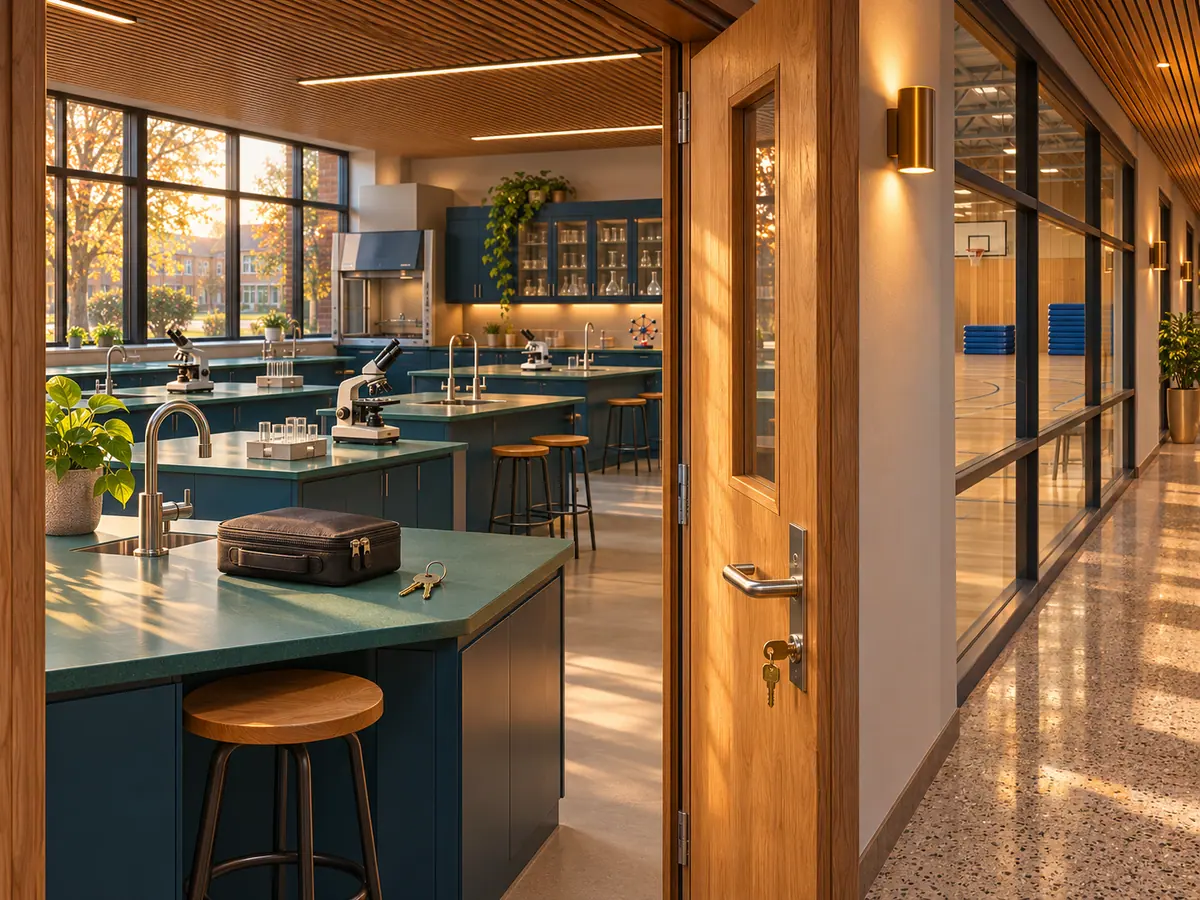
How should schools and education estates plan inspections?
Coordinate the inspection scope with the actual education calendar, site access arrangements and the people responsible for facilities and safeguarding procedures. Identify laboratories, workshops, catering, specialist equipment and any sleeping accommodation separately. Confirm access and interruption permissions before attendance, and keep the resulting electrical and fire service records distinct and traceable to the relevant buildings.
A school holiday is not necessarily an empty site. Clubs, examinations, catering, maintenance and community use may continue, while the person holding a specialist-room key may be away.
Education estate planning therefore needs a calendar of actual use rather than a simple term-time assumption. This guide helps school and estate teams prepare a practical inspection brief. It offers planning suggestions, not a statement of sector experience or a universal safeguarding rule. Apply the institution’s own procedures and the relevant jurisdiction’s requirements, with competent advice for specialist installations and premises where ordinary assumptions do not fit.
In this guide 5 sections
Read the guide offline or copy its planning points into your own records.
Download this guide as textBuild a room-use picture
List the buildings and their actual users during the proposed visit. Include leased spaces, sports facilities, community activities and temporary classrooms where relevant to the scope. Name the person who can provide site access and the person who can approve operational disruption; these may be different. Ask about current construction or maintenance work that could alter routes or supplies. HSE education guidance supports proportionate risk management, and the useful practical step is to expose the site conditions that change the work.
Distinguish ordinary and specialist areas
Identify workshops, laboratories, catering areas and specialist equipment at enquiry stage. Ask which equipment owners must be involved before interruption or access. Do not assume the fixed installation inspection includes specialist equipment maintenance or every associated safety examination. For fire services in England, the educational premises guide has a defined scope and excludes residential sleeping accommodation. Boarding or residential areas therefore need separate consideration using suitable guidance and a clearly commissioned service rather than being absorbed into a generic school brief.
| Education-estate area | Availability or specialist input needed | Planning document |
|---|---|---|
| Occupancy | Identify clubs, community users and other work during the proposed window. | A current building-use calendar. |
| Specialist rooms | Flag installations needing additional equipment-owner input. | A room list and responsible specialist contacts. |
| Visitor controls | Confirm institution-specific entry, escort and safeguarding procedures. | An approved visitor and induction brief. |
| Residential areas | Separate sleeping accommodation from ordinary teaching premises. | Distinct scope and appropriate guidance references. |
| Maintenance handover | Use recognisable building and observation identifiers. | An indexed report and action pack. |
Plan the holiday window in detail
Confirm who is on site, what keys they hold and what the inspection team must complete before entering the work area. Explain the institution’s visitor and safeguarding arrangements through its normal procedures. Agree access to locked teaching rooms and the management of alarms, IT and other dependent services. A shorter well-supported window may be more workable than a nominally long holiday visit with no authorised contact. Keep another responsible person available if the first contact becomes unavailable.
- Ask whether the holiday site is actually occupied before agreeing the programme.
- Confirm keys for specialist rooms and detached buildings in the scope.
- Identify other contractors whose work could change access or electrical arrangements.
- Give the maintenance team the report pack and a clear route for technical queries.
A holiday programme meets a sports booking and a locked laboratory
In a hypothetical trust, the proposed holiday inspection includes a sports hall and a science block. The hall remains in community use, while the technician who understands the laboratory equipment will be away. Calling the site “closed for holidays” hides both dependencies.
Ask the sports facilities contact to agree an actual release window and obtain the relevant laboratory information from the responsible specialist before leave. Confirm who will hold keys and answer site questions during attendance. If one area cannot be prepared, discuss its scope and programme separately instead of asking the caretaker to sign a general readiness declaration. Keep residential accommodation, if present, under its appropriate separate consideration. The estate team should be able to show which buildings are ready, which need another decision and why, using the real use calendar rather than the term dates alone.
Hand evidence to the people who maintain the estate
Map report references to stable building names and locations that maintenance staff recognise. Record restrictions in terms that allow another visit to be planned. Give findings to the responsible estate team and preserve the technical record alongside any management action list. Before teaching resumes, the client should arrange appropriate operational checks of affected services through its normal process. Review the visit with the site team and update the next briefing with lessons about keys, room access and equipment dependencies.
Several services questions.
Are school holidays always the best time?
They can help, but confirm actual occupancy, local support and equipment dependencies. Holiday use can make some buildings less available than expected.
Does the education fire guide cover boarding accommodation?
The cited England educational-premises guide excludes residential sleeping accommodation. Plan those areas separately using the appropriate guidance and service scope.
Find the relevant service details, access considerations and information to include in an enquiry.
Schools & academy trusts: inspection planning →Find your site area →Prepare a site inspection list →Sources used for this guide.
The linked guidance supports the factual context. Check its jurisdiction and the requirements for your actual premises.
- GOV.UK: Fire risk assessment — educational premises ↗
England guidance for educational premises; sleeping accommodation has separate guidance.
- GOV.UK: Fire risk assessment — sleeping accommodation ↗
Sleeping accommodation fire safety guidance, including hotels and guest accommodation; care premises are addressed separately.
- HSE: Using contractors ↗
Contractor selection, risk information, coordination and supervision. The practical document suggestions in this article are editorial recommendations.
Several services: scope & records.
See what the service includes and which site details help prepare a relevant quote.
View the service details