
How could a fire start
and spread?
Sources of ignition, combustible materials, work activities and relevant building features.
Understand the fire risks in your premises and the actions needed to address them. Start with how the building is used and who occupies it.
Request a fire risk assessment quoteSingle premises, complex buildings & multi-site enquiries
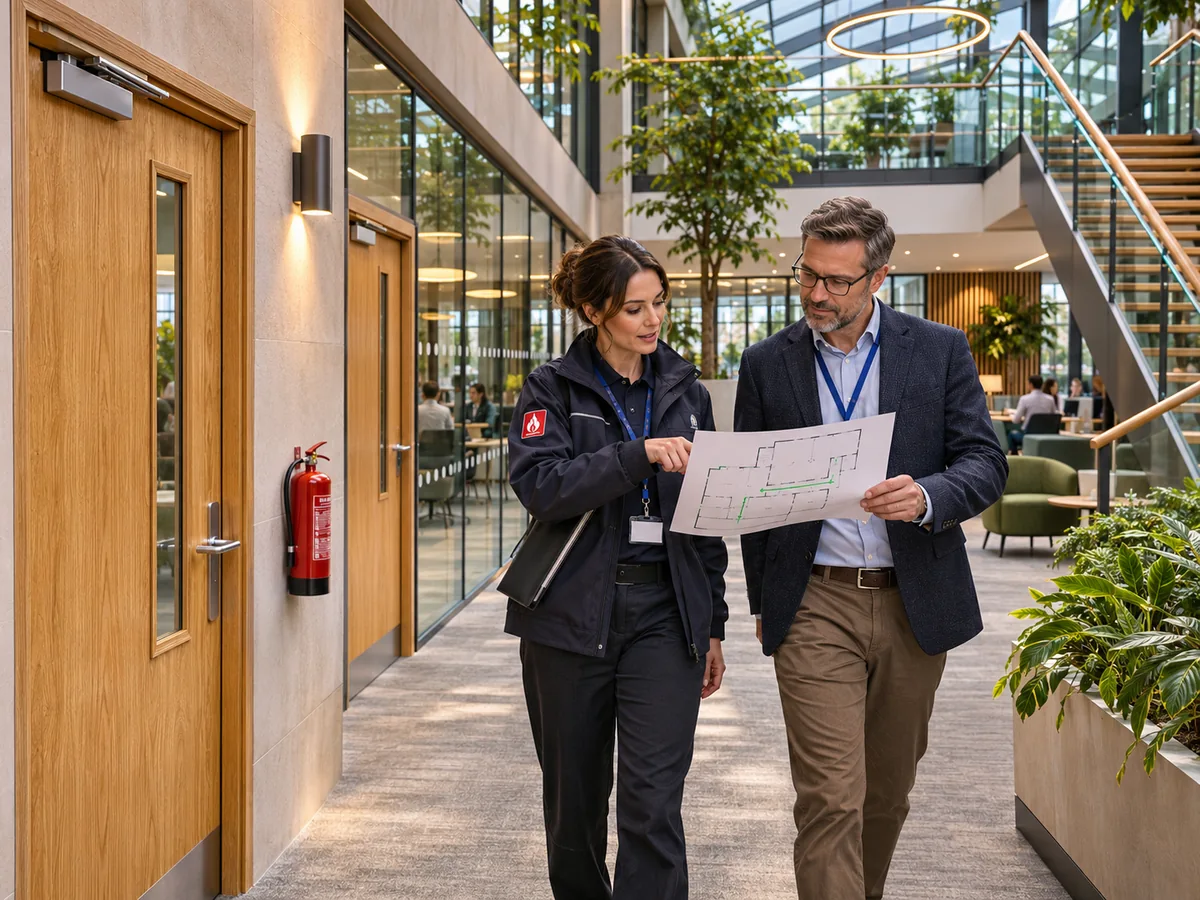
Occupancy changes the information an assessor needs. Explain the activities, layout and people who may need assistance.
Equipment condition matters, alongside escape arrangements, people’s needs and fire-safety management.
Sources of ignition, combustible materials, work activities and relevant building features.
Staff, visitors, residents and people who may need assistance or be unfamiliar with the building.
Escape routes, detection, warning, equipment, information and management arrangements.
The assessment records the findings and recommended measures. Your organisation needs to review, implement and maintain the required arrangements.
How to organise fire-safety actionsA fire risk assessment and specialist inspection services serve different purposes. Tell us about any existing findings.
No complete file yet? Explain what is available. Document gaps can be discussed before the assessment is scoped.
In England and Wales, the responsible person has duties under the applicable fire-safety legislation. Appointing an assessor does not transfer responsibility for implementing and maintaining appropriate measures. Duties and legislation differ elsewhere in the UK.
Review it regularly and when significant changes or concerns mean it may no longer be valid. Changes in layout, activities, occupancy or fire-safety arrangements should prompt consideration of a review.
Yes. Provide the property list and describe differences in occupancy, size, use and existing records. Each premises needs a scope that reflects its risks.
No. Testing, maintenance and specialist assessments may be needed for individual systems or assets. Your assessment and service quote should make the scope clear.
Choose support appropriate to the building and its risks. A useful quote makes the assessment and responsibilities clear.
Ask how the proposed assessor’s knowledge and experience fit your type of premises. Request appropriate evidence and discuss any specialist requirements.
Confirm the areas, information, access and limitations included. Identify additional inspections, reviews or specialist work that are separately scoped.
Agree the written report, action priorities, recipients and how questions are handled. Your organisation retains responsibility for acting on the assessment.
Use the relevant route for the operational detail, access questions and quotation information for your premises.
Establish who arranges the assessment, when a review is needed and which building details affect the quotation.
Understand employers, owners, occupiers and managing agents without relying on job-title shortcuts.
Read the answer Question explainedUnderstand regular review, significant changes and the evidence that should trigger an earlier look.
Read the answer Question explainedCompare assessment quotes by premises complexity, scope, access and useful reporting rather than floor area alone.
Read the answer Question explainedUnderstand the difference between fire-resisting doors and final exits, then give your assessor a clear brief about escape routes, security and door condition.
Read the answerAdd the site locations, preferred dates and any access or reporting requirements.
Add your sites, inspection requirements and preferred dates