
Fire door inspections.
A record for every door.
Identify defects in door condition and operation. Receive findings linked to individual doors so your team can locate the problem and arrange the right follow-up.

What does a fire door
inspection look at?
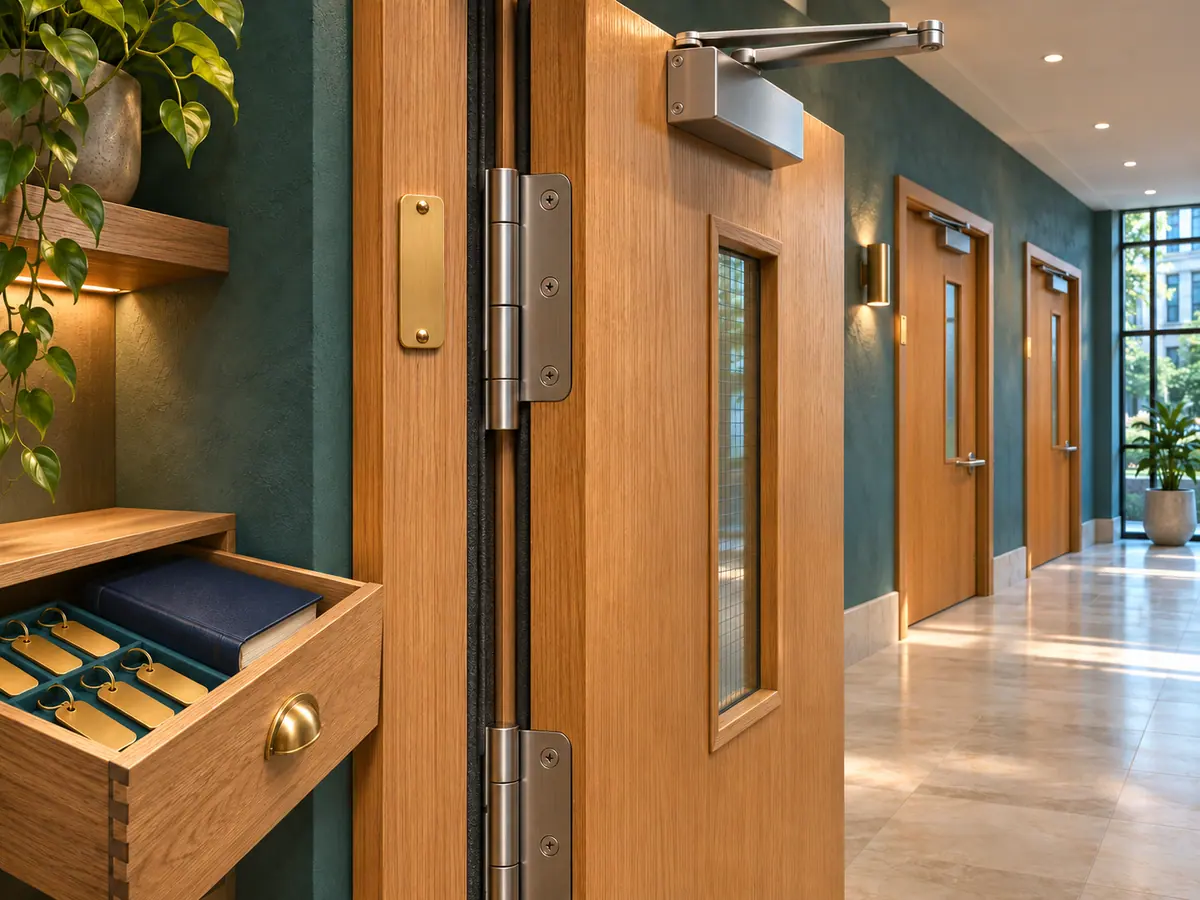
Explore the parts of a door set. The inspector’s assessment considers the installation and available evidence.
Inspection illustration · Not an installation specification
Condition, fit and sealing.
The door leaf, frame, visible damage, relevant gaps and applicable seals are considered. Door identification and supporting information help establish what is installed.
Glazing and visible defects.
Where glazing is present, its condition, retention and available identification are considered as part of the door set. Make existing door information available.
Hinges, latches and other hardware.
Visible fixings, damage and operation are checked. Findings should identify the affected component and the relevant door.
Does the door close effectively?
Closing action and relevant hardware are assessed. Tell us about access-control systems or unusual operating arrangements before attendance.
Find the door.
Understand the defect.
Arrange the follow-up.
Reaction describes door identification, photographic records and QR asset labels. Confirm the report format and scope in your quote.
- Door reference and location
- Condition and operation findings
- Photographs and identified defects
- Recommended follow-up for your team
Repairs need a defined scope. An inspection does not itself certify every aspect of an undocumented installation.
Which doors need inspecting?
Communal doors and flat entrance doors can need different access arrangements. Include both if they are in scope.
Coordinate staff, secure areas and access-control arrangements.
Add commercial doors →Communal & corridor doorsIdentify blocks, floors and keyholders for common areas.
Add communal doors →Flat entrance doorsPlan resident appointments, communication and missed access.
Add entrance doors →Be clear about
the inspection you need.
Routine door checks and a detailed specialist inspection are different activities. Explain whether you are responding to an assessment, setting up an asset record or arranging ongoing checks.
GOV.UK: fire-door guidance for England ↗Give every door
a clear location.
Bring together the building, floor, door reference and door type. Include access arrangements for secure areas and occupied flats so the inspection can be planned around the people using the building.
Add your doors & locationsFire door inspection questions.
How do we estimate the number of doors?
Use a door schedule if available. Otherwise give an approximate count by building, floor or block, and say which door types it includes. The enquiry accepts an unknown quantity.
Are residents contacted automatically?
Resident communication and appointments need to be agreed. Tell us who manages access, what notice is required and how missed appointments should be handled.
Will the inspection include repairs?
Inspection and remedial work should be clearly scoped. Use the findings to agree repairs, replacement requirements or further investigation.
Does the same legal checking rule apply to every building?
No. Requirements depend on building type, use, height and jurisdiction. The linked guidance addresses specific duties in England. Confirm the obligations and inspection scope for your premises.
Fire door findings, repairs or several sites?
Fire door inspections
for your industry and area.
Use the relevant route for the operational detail, access questions and quotation information for your premises.
Industry requirements
Schools & academy trusts Care homes Hotels & guest accommodation Managing agents & residential blocks Student accommodation Facilities-management providers All industriesLocal inspection planning
London Manchester Sheffield Newcastle upon Tyne Portsmouth Glasgow All regions and areasFire door regulations, reports & defects.
Understand the requirements and findings before commissioning an inspection or deciding what needs further attention.
Fire door regulations in England: which duties apply to your building?
Separate residential Regulation 10 checks, wider fire-safety assessment and inspection scope, with practical records and access questions for property teams.
Read the answer Question explainedFire door gaps and seals: interpreting a finding before work is specified
Understand head, side and threshold gaps, smoke seals and intumescent strips, and the evidence needed to turn a fire door finding into a defined inspection enquiry.
Read the answer Question explainedFire door identification and ratings: what labels and records can tell you
Understand FD30, FD60 and smoke-control descriptions, product labels and door records, with practical evidence questions for managing commercial and residential assets.
Read the answer Question explainedBS 8214:2026: what the fire door standard means for property teams
Understand the current BS 8214 edition, whole-door evidence, specifications and inspection briefs without confusing a standard reference with a certificate.
Read the answer Question explainedDoes a fire door inspection certify the door?
Understand inspection evidence, product certification, installation information and the limits of a report.
Read the answer Question explainedFire doors and fire exit doors: different roles in a safe escape route
Understand the difference between fire-resisting doors and final exits, then give your assessor a clear brief about escape routes, security and door condition.
Read the answerRequest a fire door inspection quote.
Add the site locations, preferred dates and any access or reporting requirements.
Add your sites, inspection requirements and preferred dates