
Identify occupancy and the system.
Explain how the building is used, which areas remain occupied and which escape routes or activities could be affected. Make relevant system information, test facilities and existing records available.
Need evening or weekend access? Request a suitable testing window and include building occupancy, affected areas and battery recharge in the plan.
Attendance and the safe testing arrangements are subject to the system, agreed scope and availability.
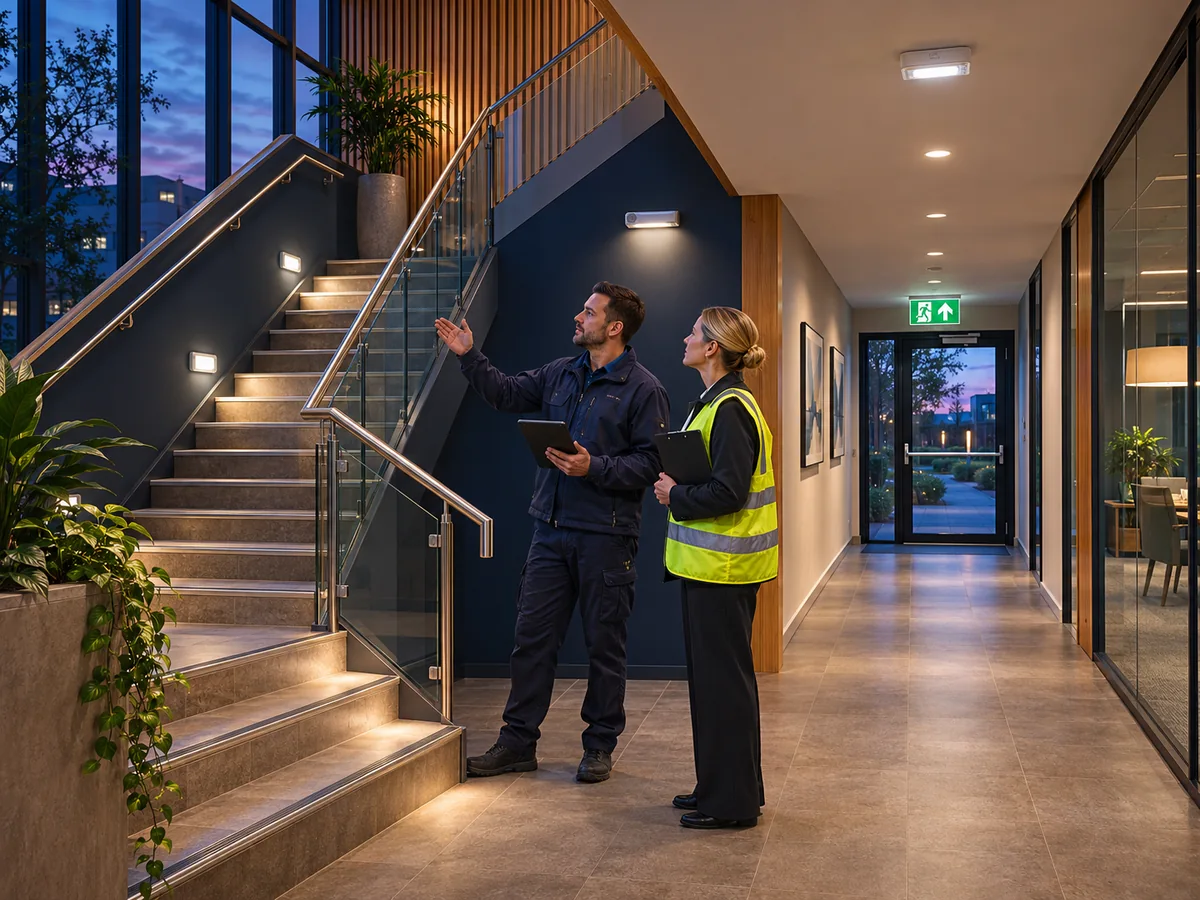
After a duration test, batteries need to recover. Consider what would happen if normal lighting failed during testing or before the emergency system has sufficiently recharged.
Explain how the building is used, which areas remain occupied and which escape routes or activities could be affected. Make relevant system information, test facilities and existing records available.
Confirm whether functional or duration testing is required and how results and faults will be recorded. The appropriate test is determined by the system and applicable requirements, not simply the length of a convenient appointment.
Account for the system’s recharge requirements, any defective units and the safe use of affected areas. Do not assume the whole premises can be treated as fully ready as soon as the test finishes.
A functional test and a duration test establish different things. Explain the existing programme, available records and any overdue tests or defects. If you are unsure, ask for help establishing the correct scope before agreeing the visit.
There is no single duration or recharge time stated here for every emergency lighting system. Use the applicable system information, requirements and competent advice when planning the work.
Working outside normal opening hours may be useful, but a night visit can be unsuitable if staff or guests still rely on the affected escape arrangements. Give the actual occupancy pattern, not only the office opening hours.
Describe the people and activities that remain after the main working day.
Account for guests, residents, staff and relevant escape arrangements during testing and recharge.
Identify occupied areas, work activities and the contacts who can authorise the agreed arrangements.
Plan the programme by site. Different systems, opening hours and local conditions can need different testing windows.
Agree the location references and test records your team needs. A failed or uncompleted test should be identifiable, with the affected equipment and recommended follow-up recorded appropriately.
Tell the team about faults already known before the visit. Testing, repairs, replacement and any verification are separate scope questions. A test record is useful only if the responsible organisation understands what still needs attention.
Yes. Give the usable hours, occupancy and required testing in the enquiry. Suitable attendance and safe testing and recharge arrangements need confirmation; an out-of-hours appointment is not automatically guaranteed.
That depends on the system and how the building is occupied afterwards. Consider the risks during testing and battery recharge, including a possible failure of normal lighting.
Do not assume so. Fixed-wire inspection and emergency lighting testing serve different purposes. Name each required service and confirm its scope and records in the quote.
Explain the known defects and requested support. Repairs or replacements, authorisation and any further testing need an agreed scope; they should not be assumed to be included in the test price.
Use the detail to prepare your site information and questions for the team.
Add the required test, premises use and preferred working window. Include any occupancy or recharge constraints in the full enquiry.