
Maintenance or component repair
Identified door, compatible specification and defined work
Have an inspection report or a recurring door fault? Request maintenance, repair or replacement with the affected doors, specification and completion records clearly defined.

Share the existing report, door references and photographs, together with the building address and use. Tell us what has changed since the inspection and whether any work has already been completed. A finding tied to a door and location is a better starting point than an instruction to “make everything compliant”. It helps establish what needs clarification, what can be priced and whether further examination is needed.
No report yet? Describe the problem and the available records. A damaged component, a door that does not close properly and an uncertain product history may need different responses. The initial discussion will establish the next appropriate activity and the information needed. Where a concern affects current building operation, notify the person responsible for the premises promptly and follow the site’s fire-safety arrangements.
Repair and replacement are decisions about the installed door, not just the item that looks damaged. Available product information, the frame, hardware, seals, glazing and the door’s intended role can affect the specification. The proposal should identify the work being priced and the evidence supporting it, with any information or investigation still required made clear.
Existing doors can have different histories. Missing old paperwork alone should not become a blanket replacement instruction; equally, an old door should not be assumed suitable without considering the finding. If work reveals that a door, frame or surrounding construction cannot support the proposed repair or upgrade, the changed requirement needs to be explained and agreed. Keep variations visible so the authorised scope follows the actual conditions.
Identified door, compatible specification and defined work
Question being investigated and limits of the initial scope
Required arrangement, affected construction and associated work
Revised recommendation, cost implications and authorisation
For a quote, provide approximate door numbers, locations, building use, available reports and the timescale you are working towards. Explain occupied areas, local access restrictions and any resident appointments. If several blocks or sites are involved, send a schedule showing the differences. A useful quotation makes its assumptions clear, including areas that need a separate visit or information before the work can be confirmed.
Agree who gives site access, communicates with residents and authorises work. Identify any induction, permit or local approval arrangements before dates are set. For occupied premises, discuss how the work area and necessary temporary arrangements will be managed with the responsible site team. The agreed order should distinguish inspection, repair, replacement and any separate assessment or design requirement so the appointment has a clear purpose.
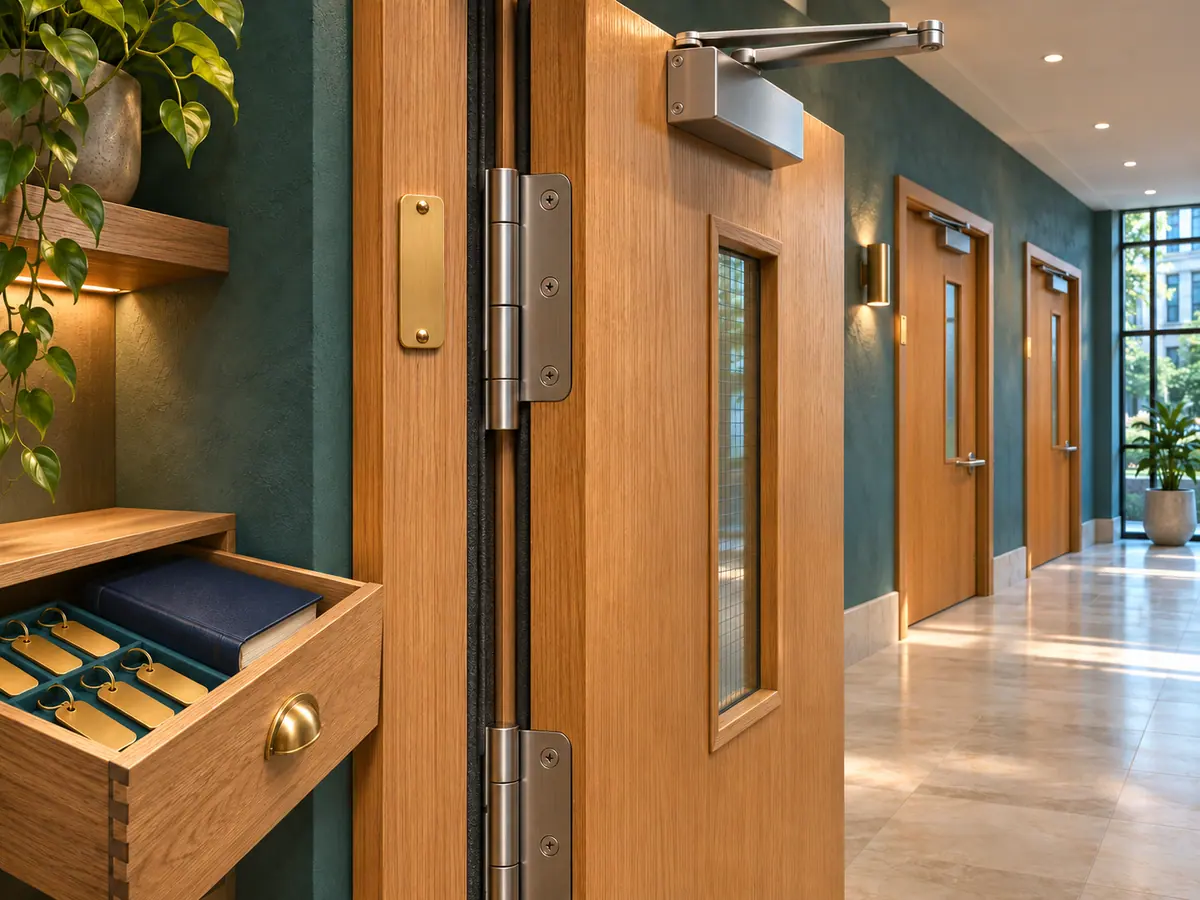
Agree the handover information before work begins. It should identify the doors and work completed, record any relevant limitations and preserve the connection to the original finding. Where a report or certificate is applicable, establish exactly what it covers. A document about the agreed door work should retain that scope rather than imply assurance about the entire building or every concealed detail.
After handover, update the action register with the completion record and any outstanding questions. Retain the previous inspection, the agreed specification and variations so a future property manager can follow the decision. Fire doors still need ongoing management: later damage or alterations can change their condition. For larger programmes, agree the references and reporting structure at the outset so each building’s work can be reviewed clearly.
What does each document establish?Send the report, affected door references and available supporting information. It can begin the quotation process; further clarification or a site examination may be needed before particular work is confirmed.
No automatic conclusion applies to every finding. The door, its role, available evidence and proposed specification need to be considered before a repair or replacement is agreed.
Describe the locations, door counts and access arrangements in a property schedule. The quotation can then define the agreed programme and any site-specific requirements.
Documentation relates to the inspection or work agreed and performed. The building’s wider fire strategy and management duties remain separate from the door-work handover.
Use the detail to prepare your site information and questions for the team.
Add the affected doors, premises, existing findings and access arrangements. The quotation will define the work, records and any further information required.