
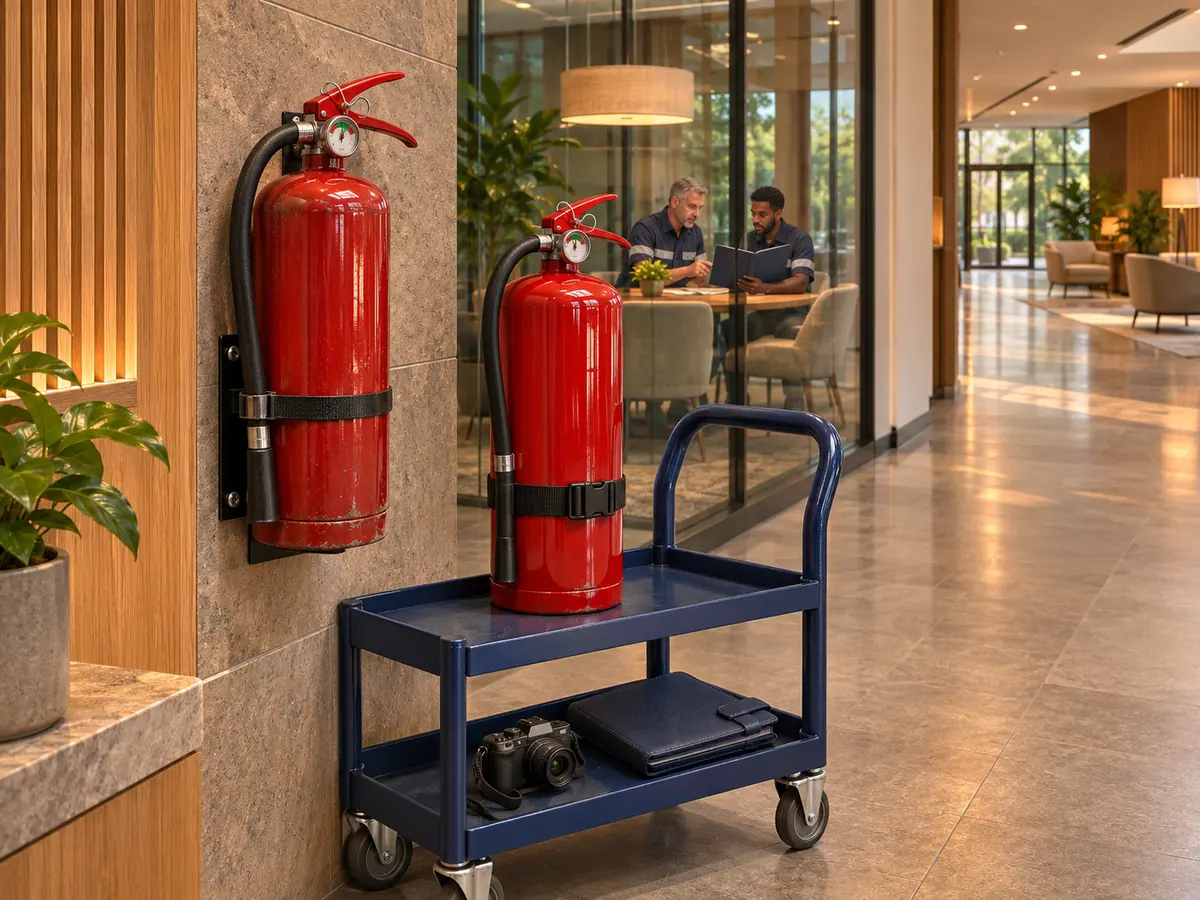
What should a manager check before approving an extinguisher replacement?
Ask which asset is affected, why replacement is recommended and what competent assessment supports the proposed response. Confirm suitability for the location, the full scope and cost, and how necessary protection will be maintained. Record authorisation and completion against the asset, including changes to the inventory and any unresolved wider provision question.
Replacement recommendations can arrive while an engineer is on site and an approver is between meetings.
The answer needs to be prompt enough to manage the issue, but informed enough to distinguish a necessary response from an unexplained purchase. A short approval process helps both parties. This guide addresses the commercial decision and its records; it is not a method for assessing extinguisher condition or choosing equipment without competent advice. Equipment must suit the hazards and the premises. A replacement that looks similar to the old unit may still require a different decision if the activity or layout has changed.
In this guide 5 sections
Read the guide offline or copy its planning points into your own records.
Download this guide as textAsk for a reason tied to an identifiable asset
Begin with the asset reference, type and precise location. Ask the contractor to state the finding and the basis for replacement. Useful distinctions include observed damage, condition discovered during servicing, missing history requiring a maintenance decision or a change in the hazard being protected.
Avoid approving a list that says only 'expired' without explaining what that term means for the particular unit. Likewise, age alone should not be turned into one universal replacement rule across a mixed inventory. Ask a competent provider to explain the relevant maintenance or technical basis. A clear reason lets the property team prioritise, obtain approvals and retain an intelligible history.
Check the proposal answers the actual need
Confirm that the proposed equipment and location have been considered against the risks and existing arrangements. If a kitchen, process area or tenancy has changed, a simple like-for-like order may not answer the wider provision question. Ask whether a review is needed and who will undertake it.
Keep that question separate from the condition of the current asset. A service engineer may identify a defective unit without having been commissioned to assess the whole building's extinguisher provision. Record any limits. The manager should understand whether the recommendation concerns restoring an existing arrangement or changing that arrangement, because the evidence and approvals may differ.
Make the full commercial scope visible
Request the supply cost and any associated commissioning, siting, mounting, signs, removal, disposal or return-visit charges that apply. Ask what documentation will be provided. If options are offered, compare the complete outcome rather than the headline unit price.
For a portfolio, use a consistent approval form but allow technical explanations to differ. A ceiling for routine additional work can be useful when carefully defined; it should not authorise an unexplained change in equipment type or quantity. Agree who can approve work when the main contact is absent, and ensure the contractor has a reliable contact route during the visit. Delayed decisions should remain visible as open actions.
Resolve continuity before the old unit disappears
Discuss what happens between finding a problem and completing the response. Where equipment is necessary, removing it without appropriate arrangements can create a gap. The suitable response depends on the premises and finding, and should be agreed with competent advice through the property's fire safety arrangements.
Do not ask staff to move extinguishers from elsewhere merely to fill a space, or to repair, discharge or refill a suspect unit. That can create other gaps or hazards. Record the affected location, any properly agreed interim arrangement, its owner and review point. An urgent safety concern should be escalated promptly rather than left waiting for the next procurement meeting.
Close both the order and the safety action
At completion, check that the evidence identifies what was supplied or done and where it is located. Update the inventory and retain the link between the removed asset and the replacement. Preserve relevant maintenance history without presenting it as the new unit's record.
Confirm that any related action has actually been answered. A replacement invoice may close a purchase order while leaving a question about overall suitability or access unresolved. If the recommendation came from a fire risk assessment, link the completion evidence to that finding as well. This avoids a familiar administrative failure: finance sees a paid invoice while the property team cannot establish whether the original issue is closed.
| Approval question | Evidence to request |
|---|---|
| Which unit? | Asset reference and exact location |
| Why replacement? | Specific finding and technical explanation |
| What is included? | Proposed equipment, associated work and costs |
| How is it closed? | Completion record, inventory update and any verification |
Extinguisher servicing questions.
Should a replacement always match the previous extinguisher?
Not automatically. The proposed unit must be suitable for the current hazards and arrangements. Ask for competent confirmation, particularly where use or layout has changed.
Is a photograph enough to approve the work?
It can support identification and an observed finding, but it may not explain the technical basis or suitability of the proposal. Request a written explanation and complete scope.
What if the contractor needs a decision immediately?
Use an agreed escalation contact and approval process. Address the safety implications promptly with competent advice, recording the reason, decision and any temporary arrangements.
Find the relevant service details, access considerations and information to include in an enquiry.
Find inspection advice for your industry →Find your site area →Prepare a site inspection list →Sources used for this guide.
The linked guidance supports the factual context. Check its jurisdiction and the requirements for your actual premises.
- London Fire Brigade: portable firefighting equipment ↗
Extinguisher provision, competent servicing and maintenance records; equipment decisions remain site-specific.
- Home Office: offices and shops ↗
Risk-based precautions, maintenance and management for offices and shops; not a universal equipment prescription.
- Reaction Group: fire extinguisher servicing ↗
Confirms service offering; supply, replacement and additional work must be agreed.
Extinguisher servicing: scope & records.
See what the service includes and which site details help prepare a relevant quote.
View the service details