
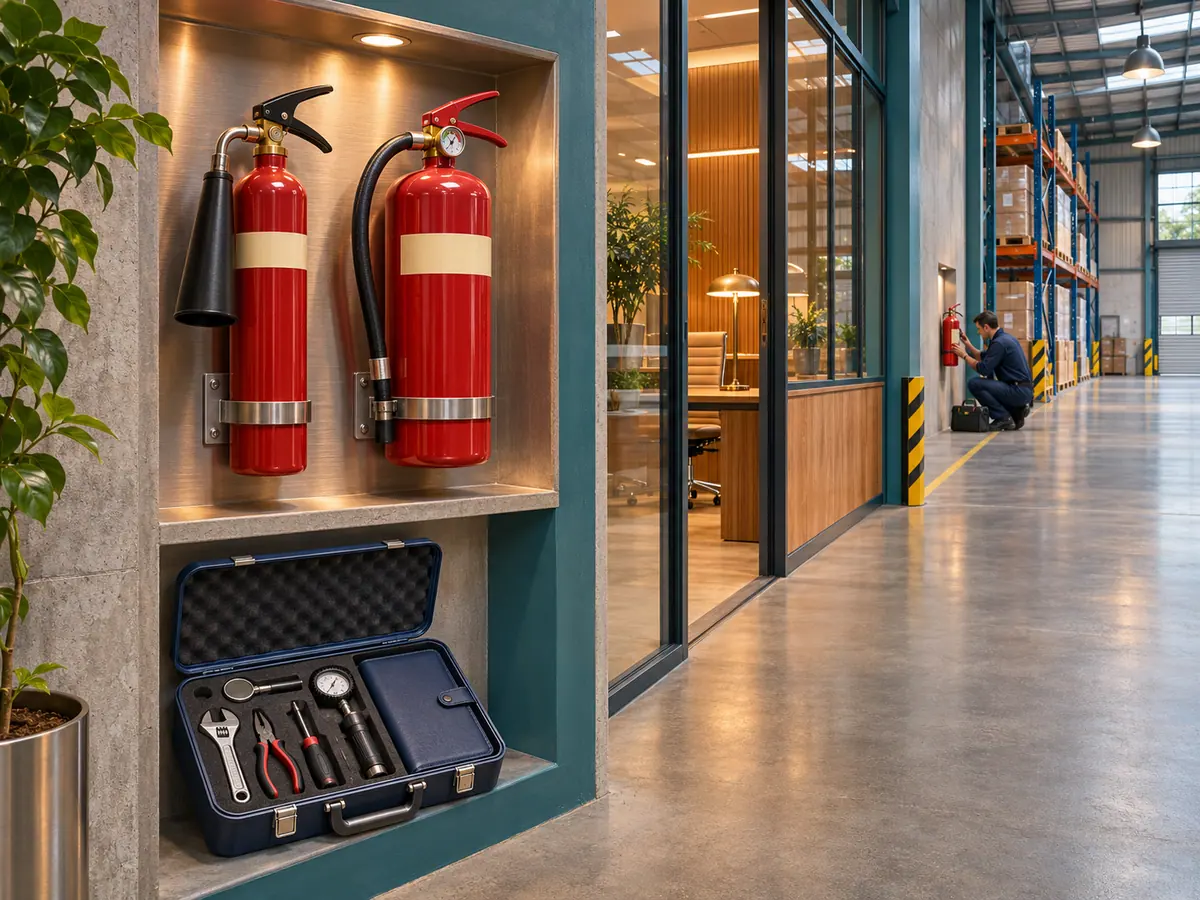
What should a fire extinguisher servicing specification include?
Define the premises and extinguisher population, provide available service history and agree how assets, findings and inaccessible equipment will be recorded. Separate planned servicing from replacement, additional work and disposal. Specify urgent communication, authorisation limits and completion evidence so the visit produces a usable record of what was actually examined and done.
A purchase order saying 'service extinguishers' leaves several commercial questions unanswered. Which buildings are included?
Does the price assume an accurate asset list? Who approves a replacement? What happens if a locked tenant area contains equipment outside the schedule? A concise specification resolves these questions before attendance. This guide is for commercial property teams commissioning competent servicing, not for undertaking maintenance themselves. Equipment selection and the maintenance regime should reflect the premises, risk assessment, applicable standards and manufacturer's information. The specification should make those decisions reviewable without trying to reduce every extinguisher to the same generic rule.
In this guide 5 sections
Read the guide offline or copy its planning points into your own records.
Download this guide as textDescribe the estate and the equipment
List the properties, their uses and the areas within the appointment. State whether equipment belongs to the landlord, occupiers or both. Provide the existing inventory if available, with the date it was last reconciled. Mark counts as provisional where they are estimates.
Include known changes such as a new kitchen, a closed floor or a tenant fit-out. Ask the contractor how equipment absent from the list will be identified and reported. A provisional asset count should not silently become permission to remove or replace anything found on site. The point is to establish a common baseline while retaining proper control over additional work.
Define planned work and its limits
Ask the competent provider to state the service basis and how the equipment's type, condition and history affect the work. Make clear whether the appointment includes only identified servicing or also a review of provision and suitability. These are related activities but may have different scope and outputs.
Avoid using a single age rule for every asset. Different equipment and maintenance histories can require different decisions. Do not ask site staff to discharge, dismantle or recharge extinguishers to prepare for the visit. If equipment is suspected to be damaged or unreliable, report it through the site's arrangements and obtain competent advice about maintaining appropriate protection.
Set rules for replacements and extra charges
Specify who can authorise further work and what information they need. Require an asset reference, reason, proposed response and itemised cost before non-emergency additional work is agreed. Distinguish an unsuitable unit, a maintenance requirement and a commercial recommendation; the explanation should make the basis clear.
Address what happens when an immediate concern is found and the usual approver is unavailable. Agree the escalation contact and any pre-authorised limits with a clear scope. Include supply, commissioning where relevant, mounting, signs, disposal and return visits in the discussion so they do not appear as unexplained additions. The appropriate response should preserve protection while avoiding undocumented substitutions.
Plan access and safe continuity
Give the contractor site contacts, induction requirements, security arrangements and any restricted areas. Confirm whether tenant permission or an escort is needed. Arrange work so equipment is not inadvertently unavailable where it remains necessary. The contractor and manager should agree any temporary arrangements appropriate to the situation.
For multiple sites, define how each location is signed off and how missed access is reported. A single annual invoice is not a reliable coverage schedule. Record areas not reached and equipment not located, with a follow-up owner. Where the layout has changed, refer questions about overall provision back to the relevant competent review rather than assuming the previous distribution remains suitable.
Ask for records that support the next service
The completion record should connect the work to identifiable assets and locations, show the date and provider, and distinguish work completed from recommended actions. Ask for a reconciled schedule where this is part of the commission. Preserve significant history and any limits on what could be established.
Review the report against the site list and authorisations. Transfer unresolved findings into the action register and keep replacement evidence attached to the correct asset. London Fire Brigade guidance recommends recorded maintenance and competent servicing; the practical procurement fields below help make that record useful. Keep the property's copy accessible even if a supplier portal or contract changes.
- Sites, areas and ownership boundaries defined
- Asset count and history qualified where uncertain
- Planned work separated from provision review
- Additional work and replacement approvals agreed
- Completion records, no-access list and follow-up specified
Extinguisher servicing questions.
Should servicing include replacement automatically?
Agree that explicitly. Some findings may require replacement, but authorisation, reasons, cost and continuity arrangements should be clear. A broad servicing instruction should not conceal an unlimited replacement order.
Can several buildings use one specification?
Yes, with a site schedule showing equipment, access and any special requirements. Preserve property-level reports so incomplete coverage in one building remains visible.
What if no inventory exists?
State that when requesting the quote. Ask for a baseline inventory or reconciliation as an identified part of the commission, with an agreed approach to additional assets.
Find the relevant service details, access considerations and information to include in an enquiry.
Find inspection advice for your industry →Find your site area →Prepare a site inspection list →Sources used for this guide.
The linked guidance supports the factual context. Check its jurisdiction and the requirements for your actual premises.
- London Fire Brigade: portable firefighting equipment ↗
Extinguisher provision, competent servicing and maintenance records; equipment decisions remain site-specific.
- Home Office: offices and shops ↗
Risk-based precautions, maintenance and management for offices and shops; not a universal equipment prescription.
- Reaction Group: fire extinguisher servicing ↗
Confirms service offering; supply, replacement and additional work must be agreed.
Extinguisher servicing: scope & records.
See what the service includes and which site details help prepare a relevant quote.
View the service details