
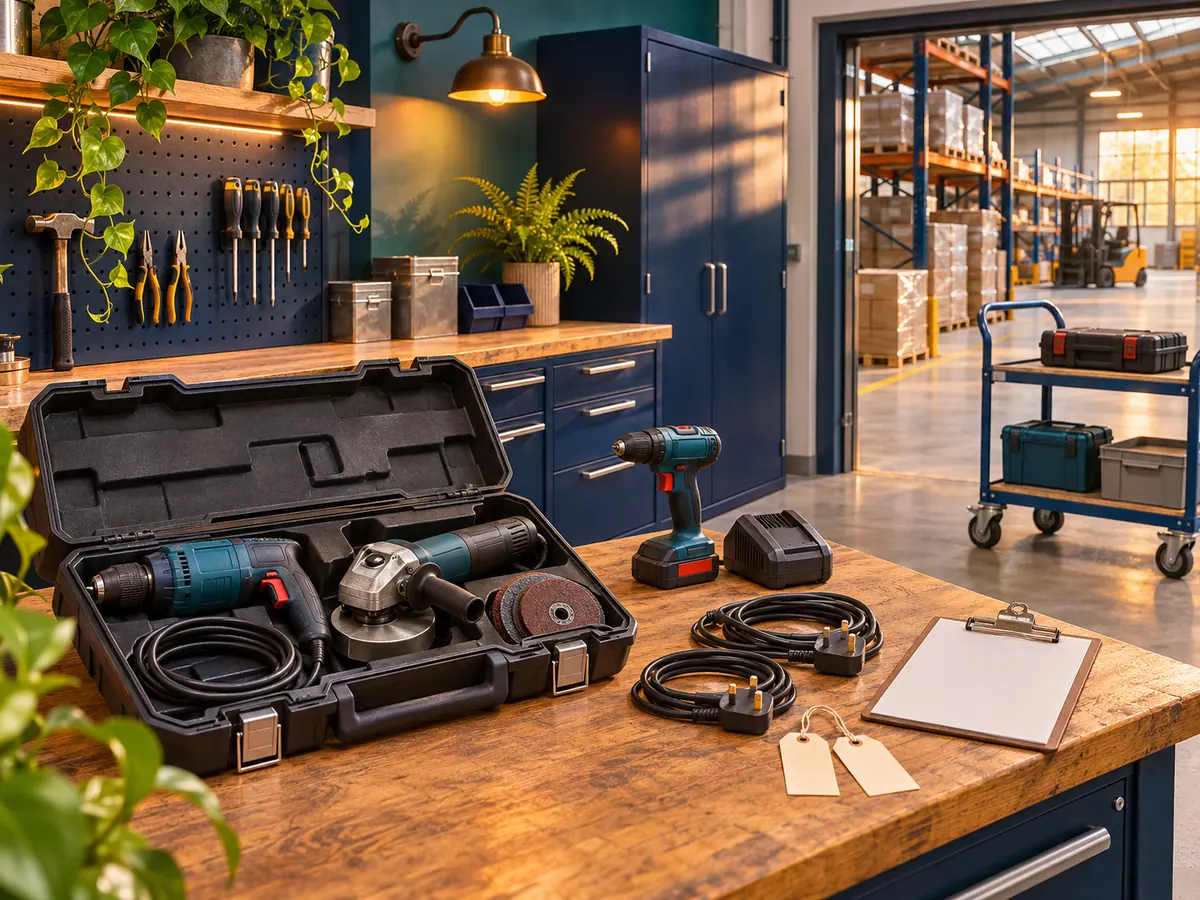
How do you prepare portable tools for inspection and testing?
Group tools by use conditions and location, identify their leads, chargers and supply arrangements, and arrange access across teams and shifts. Include hired and mobile equipment in the responsibility plan. Use findings, damage exposure and competent advice to set maintenance actions, with a clear process for withdrawing defective tools and clearing unavailable items.
A tool fleet rarely sits neatly on one shelf waiting for an annual visit. Some tools travel in vans, some are on hire and others are in use when the assessor arrives.
Their electrical risks also vary: an office drill used occasionally is different from a tool repeatedly moved through a demanding work area. Planning should therefore start with how the tools are actually used and controlled. This guide helps commercial teams organise inspection and testing while keeping the focus on safe, available equipment rather than simply producing a large number of labels.
In this guide 5 sections
Read the guide offline or copy its planning points into your own records.
Download this guide as textGroup by work, not purchase date
Build groups around the environment, frequency of use, movement and likely damage. Record whether equipment is used outdoors, exposed to moisture or dust, carried between jobs or shared across shifts. Manufacturer instructions and the suitability of equipment for its intended work are part of the assessment.
Do not apply an office maintenance assumption to a workshop or construction activity merely because both use plugs. HSE provides different guidance for different conditions. Where specialist plant, unusual supplies or particular work environments are involved, arrange competent advice suited to that work rather than stretching a general PAT visit beyond its scope.
Bring the whole working set into view
Include extension leads, cord sets, transformers and chargers where relevant to the maintenance scope. Record which items are separate assets and how shared accessories are controlled. Battery tools may still depend on mains-powered charging equipment; a count of tool bodies alone will not reveal the electrical equipment needing attention.
Check the practical locations: vans, loan stores, repair cages, supervisors' cupboards and temporary work areas. Ask the people using the equipment to confirm what is absent and when it will return. This is often faster and more accurate than asking one central administrator to account for every piece of equipment from memory.
Make availability a planned task
Schedule collection or staged access so tools can be presented without uncontrolled interruption of work. If equipment is needed continuously, agree temporary substitutes or a different window. Confirm who has authority to withdraw a tool if a defect is found and whether suitable replacement equipment is available.
In a hypothetical maintenance team, two vans return on different days. Treat them as separate planned batches with a shared register, rather than reporting the first day as a completed fleet visit. Record what has been assessed and what remains outstanding so the manager can track coverage without confusing attendance with completion.
Tell supervisors how tools will be issued and returned during the assessment period. A temporary handover sheet can show the asset reference, presenting team, inspection status and return location. This reduces the chance that a tool awaiting assessment is mistaken for completed stock, particularly where identical models are shared by several shifts and move quickly between the store and work areas.
Respond to defects at their source
HSE’s approach includes user checks, formal visual inspection and testing where justified. Users need to recognise obvious damage and know when to stop using equipment. They should not wait for the next contractor visit if a lead is cut or an enclosure damaged.
Review patterns across the fleet. Repeated damage at the same cable entry, work area or storage point can indicate unsuitable handling, storage or equipment selection. A repair addresses the item; a change to the way work is done can address the recurring cause. Keep those two actions linked in the maintenance record.
Control return to service and exceptions
Keep failed or suspect equipment separate from usable stock and ensure it cannot casually be borrowed again. Arrange competent repair or replacement, with appropriate checks or tests after repair. Record the outcome against the original identifier so the history remains understandable.
At the next review, use the findings to assess whether the inspection plan was effective. A fleet with recurring damage needs more than a reminder date; it needs a decision about prevention, supervision and the suitability of the equipment provided.
- Work groups describe environment, movement and actual use.
- Tools, leads, chargers and relevant accessories are in the agreed scope.
- Hired, contractor and shared equipment have clear responsibilities.
- Shift and vehicle schedules support access to mobile items.
- Defect reporting leads to effective withdrawal from use.
- Repairs, retesting, replacements and missing items remain traceable.
PAT testing questions.
Can a hire label replace our own checks?
No label removes the need to ensure equipment is suitable and safe for its actual use. Agree responsibilities with the hire provider and check the condition when equipment arrives and during use.
Is the same interval suitable for every tool?
Not necessarily. Risk depends on equipment, use and environment. Set a reasoned plan and review it in light of defects, repairs and changes to the work.
Find the relevant service details, access considerations and information to include in an enquiry.
Find inspection advice for your industry →Find your site area →Prepare a site inspection list →Sources used for this guide.
The linked guidance supports the factual context. Check its jurisdiction and the requirements for your actual premises.
- HSE HSG107: Maintaining portable electrical equipment ↗
Supports equipment maintenance using user checks, formal visual inspections and appropriate tests, with decisions based on use, environment and findings.
- HSE: Portable appliance testing questions ↗
Explains risk-based maintenance, new equipment, competence, and the position on annual testing, labels and records.
- The Electricity at Work Regulations 1989 ↗
Great Britain: duties concerning safe systems, maintenance, isolation and competence. It does not set a universal annual PAT or five-year commercial EICR timetable.
PAT testing: scope & records.
See what the service includes and which site details help prepare a relevant quote.
View the service details